3D Texture Embroidery Seamless Pattern
As an embroidery designer with years of experience in craft fair booths and handmade markets, I’ve seen countless designs come and go. Some fade quickly, while others become staples in my product lineup. The 3D Texture Embroidery Seamless Pattern is one that stands out for its versatility, visual appeal, and practicality for a wide range of craft fair products.
First Impressions: Bold, Textured, and Timeless
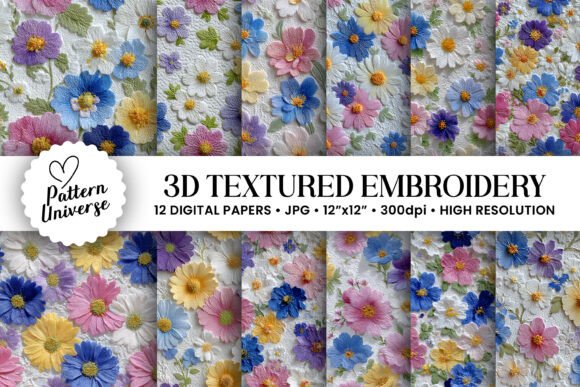
The 3D Texture Embroidery Seamless Pattern immediately gives off a sense of depth and richness. It’s not just a simple motif—it feels like a design that can elevate any handmade product. Whether you're looking for something modern, rustic, or elegant, this pattern has the potential to fit into multiple styles. Its texture makes it feel tactile, which is crucial when customers are browsing at a craft fair.
This design works especially well on items like tote bags, aprons, and tea towels where the texture can be appreciated up close. It also adds a premium touch to small shop products, making them stand out among more basic designs.
Where 3D Texture Embroidery Seamless Pattern Shines
At a craft fair, visibility is key. The 3D Texture Embroidery Seamless Pattern catches the eye, especially when placed on larger items like pillow covers or market bags. It also makes a strong impression on smaller products like embroidered patches or caps, where the detail can be seen without overwhelming the item.
For Etsy sellers, this pattern is a great addition to printable mockups and digital embroidery files. It provides a unique selling point that can differentiate your listings from others. When used in wall art or scrapbook backgrounds, it brings a level of sophistication that appeals to creative entrepreneurs.
Practical Selling and Production Points
One of the most important factors for a craft fair seller is how easy a design is to produce. The 3D Texture Embroidery Seamless Pattern is designed to be seamless, which means it’s easier to work with in machine embroidery designs. It can be scaled up or down without losing much of its character, making it adaptable for both small accents and large focal points.
Photographing this design for online listings is straightforward. The texture adds dimension to images, which helps in showcasing the quality of the finished product. However, it’s important to ensure proper lighting and angles to highlight the 3D effect.
Batch production is another consideration. If you’re planning to make multiple items with this design, the stitch density and hoop size will play a role in how efficiently you can produce them. It’s wise to test the embroidery file on different fabrics before committing to large quantities.
Careful-Use Notes for Embroidery Designers
While the 3D Texture Embroidery Seamless Pattern is visually striking, there are some details to consider. Dense stitch areas may cause puckering on certain fabrics, so using the right stabilizer is essential. Tiny details might not show up clearly on dark fabrics or textured towels, so it’s best to test on a few samples first.
When working with curved surfaces like caps, the design may require slight adjustments to maintain clarity. Small lettering or intricate elements could be lost if the design is too compact, so scaling appropriately is key.
Impact on Visual Appeal and Customer Engagement
The 3D Texture Embroidery Seamless Pattern adds visual interest to any product. At a craft fair booth, it draws attention and encourages customers to pick up and examine the items. This is especially valuable for small shop products that need to stand out in a crowded space.
It also enhances the perceived value of handmade products. A well-executed embroidery design can make a customer feel like they’re getting something special—something that’s not mass-produced. This is crucial for brand consistency and customer loyalty.
For commercial embroidery projects, this pattern offers flexibility. It can be used across different product lines, helping to create a cohesive look that reinforces your brand identity. Whether you're creating a line of tote bag designs or apron embroidery, the 3D Texture Embroidery Seamless Pattern can tie everything together.
Embroidery Designer Tips for Success
If you're considering adding the 3D Texture Embroidery Seamless Pattern to your product lineup, here are a few tips:
- Test the design on scrap fabric to see how it looks in real life.
- Check thread colors against the fabric to ensure contrast and visibility.
- Review spacing to avoid overcrowding, especially on smaller items.
- Confirm hoop size to ensure the design fits comfortably.
- Inspect stitch density to prevent issues on thick or textured fabrics.
- Use the right stabilizer for the fabric type you're working with.
- Create at least one real mockup to see how the design translates to a finished product.
- Compare fabric colors to ensure the design looks as intended.
- Confirm commercial licensing before selling finished products.
By taking these steps, you can ensure that the 3D Texture Embroidery Seamless Pattern not only looks good but also performs well in a variety of craft fair and handmade market settings.
Final Thoughts: A Must-Have for Creative Entrepreneurs
The 3D Texture Embroidery Seamless Pattern is more than just a design—it's a tool for building a successful craft fair product line. Its ability to adapt to different items, its visual appeal, and its practicality for production make it a valuable asset for any embroidery business or handmade shop.
Whether you're an Etsy seller, a Cricut crafter, or a boutique maker, this pattern offers a way to add depth, texture, and uniqueness to your offerings. With careful use and testing, it can become a staple in your design library and a crowd-pleaser at your next craft fair booth.